Thursday, March 26, 2020

Thule Island - [0202] Gatefell Baths

The Gatefell Baths is a temple complex dedicated to Lustria the Goddess of Love. One of the few deities in the Old Faith that is known beyond the confines of Thule Island. Everyone loves the Priestesses of Lustria, well almost everyone. The Clerics of Lough (Reformed) are a bit prudish and generally religiously intolerant and have tried to shut down the temple on more than one occasion.

Four or five years ago the High Priestess of Lustria befriended the Church of Lough Order of the Sisters of the White Shield (providing free services at the complex). She agreed to allow the Sisters of the White Shield to enjoy the baths and other treatment in exchange for keeping their main order from shutting down the complex. Since then more than a few male Templars have also discovered the joys of a hot bath and treatments at the Gatefell complex and Lustra Priestesses have become so popular the Templars  have practically rebranded Lustria as a Saint of Lough

The complex is atop a mountain escarpment. There are five thousand steps to get to the top. Most people ride in one of the mule caravans as horses are uncomfortable on the thin path. The complex is overflowing with flowers and lush plants provided by Lough worshipers who are unable to donate to the temple.

How the Baths Work

A cut-away of a bath. Note there would typically be a wall
between the bather and the fire which retains the water.
The temple is famous for its hot and cold baths, steam baths, private pools, but mostly the personal attention from the Priestesses (and a few Priests) on staff. The baths have been called a man-made wonder of the world.

Most of the baths are built with a chamber beneath that allows for temperature controlled air to heat or cool the water. In order to cool, there is a shaft down deep into the limestone which provides natural chilly air. For the heat roaring fires are provided.

Gatefell Callouts

[A1] Caldarium - This room pair of rooms is heated using a furnace in the floor below. The room to the West is the steam room. This room has a lewd statue of Lustria and benches along the edges. The Eastern room has a very hot pool. 
[A2] Frigidarium - This room is cooled by a shaft down into the limestone that naturally produces a 60 degree airflow that is further chilled by storing ice in the shaft during the winter. The constant cold air reduces the temperature in the frigidarium pool to uncomfortable levels.
[A3] Tepidarium - This pair of rooms is kept at a very comfortable temperature. The room to the Eest is the contemplation room. This room has a conservative statue of Lustria, plants and flowers everywhere, and lounge chairs for relaxing. The Eastern room has a nice temperature pool. 
[A4] Bathing and changing rooms. The priestesses of Lustria provide sponge baths to worshipers in these rooms, removing dirt and grime before worshipers enter and otherwise pollute the pools.
[A5] Kitchen and restooms. The kitchen is on the West side, a pantry and supplies in the center, and restrooms on the East.
[A6] Living area and hospital. The long North/South room is the hospital. Unlike a modern hospital this one is simply beds for patients. The other rooms are for guests. The Priestess live on the floor below.

I really need to make the map bigger and more detailed


Wednesday, March 25, 2020

Thule Island - [0102] Free City of Adina Part 3 (Old Town, Wall, and Outside Wards)

Old Town Ward

Old Town Ward is the oldest and poorest part of town. Many of the buildings appear to be ready to collapse. The population is almost entirely of Keltoi decent and Imperials will be stared at and treated rude although rarely assaulted outright during the day.
[F1] Temple of Old Faith (in North) - A small temple that contains a large bronze head of Hanno the god of luck. The head is hollow and priests sit hidden within listening to prayers. The local merchants often make donations at the temple for luck on different ventures accompanied by a prayer to Hanno, sometimes information overheard by the priests finds its way into the ears of the local thieves guild. The temple is popular with the merchants and thus popular with the city council so the Cult of Lough leaves it alone.
[F2] The Peaceful - Frequented by longshoreman, thieves, and Keltoi rebels. The place is owned and operated by the Boodle Gang who typically keeps order but this can be a rough place for strangers. It's a rough place for locals as well as fist fights often spill out into the streets.
[F3] Wet Whistle Public House - Owned by an old Bosun on a Merchant ship. A bosun's whistle dangles above the door and gives the place its name. The child beggars that plague the streets of the ward are led by a thin old codger who is always found at a table in the front of the establishment, where he can give orders and listen to the reports of his 'children' through the open window. The children make little from begging but are a great source of information for the Thieves Guild and rebels.
[F4] Tavern of the Steady Breeze - The Tavern caters to sailers and merchants of a higher class than you would find in Canal Ward. 
[F5] Temple of Lough (in South) - Built soon after the crusade hoping to convert the Keltoi to the Cult of Lough by its magisty. By all accounts it had little effect on the number of worshipers of either religion. There are bigger temples in the world but not on Thule. 
[F6] Keltoi's Promise - A public house that caters to local Keltoi and frequently runs out of ale or beer when non-Keltoi arrvie. The tunnel from the pub's cellar to the Temple of the Old Faith allows rebels to quietly move about and to spread warning messages secretly about the ward.
[F7] Ruined Warehouse - A warehouse used by land-based merchants that didn't pay the Thieves Guild tithe. Recently a fire gutted the building killing three. It is now used by the Thieves Guild for clandestine meetings.
[F8] Poor row - An cluster of housing for poor laborers. All are stalwart supporters of everything Keltoi and they act as runner and informants for the rebels as necessary. 
[F9] Ravensward Public House - A public house favored by locals.
Old Town Ward

Wall Ward

Once the poor part of town the area was destroyed during the crusade and is now where the wealthy live. Merchants, nobles, well-to-do craftsmen build their houses here.
[G1] Wealthy Home - The home of Francis LIghtenup and his extended family. The main building is a three story stone house with a cellar beneath that connects to the other buildings on the grounds.
[G2] Carvel Tavern - A small but very lush tavern that caters to the wealthy. The tavern has wines and brandies but no beer or ale. 
[G3] Merchant Trading House - The Merchant Trading house is where the Merchants buy and sell different cargo's that are not otherwise claimed. Usually the cargo's are bought or sold before the ship arrives but not always, sometimes inspections at the warehouses is required.
[G4] Crafters Guild Hall - Nearly half of the unmarked buildings on the Adina map are owned by Crafters who work in shops on the bottom floor and live above. Most craft products continually on contract to different merchants who sell them although occasionally different crafts will be available at the Market.
[G5] Merchant's Guild Hall - The Merchants set up their Guild Hall soon after Adina was declared a Free City. The hall is more of a social area for Merchants as most merchants take care of their business separately rather than having the Guild do it. The Hall is wealthy with leather and wood everywhere. Foreign Merchants in good standing with the guild are able to stay in plush rooms at very reasonable rates. The cook on staff is said to be one of the best in the Empire.
[G6] Market - The market primarily sells food products (Produce, meats, fish, etc) in the morning and pretty much any craft or knick-knack you can imagine in the afternoon. It is open every day.

Wall Ward

Outside the Wall Ward

Literally the part of the city outside the walls. The City Charter says that Adina consists of all lands for 5000 paces from the Old Castle (which is the site of the Temple of Lough (in Old Town) and Market  (in Wall Town). 
[H1] Old Bridge Inn - The Old Bridge inn mostly caters to folks with horses as the other inns in town don't have proper stables. 
[H2] Hakon Public House - A public house owned by Hakon obviously. This pub has an amazing ale and is favored by locals. Mostly farmers and fishermen who hate the Imperials. They don't like strangers. Hakon's son has been selling kegs of his father's ale to other pubs and taverns and inns in Adina without telling his old man who would not approve, but instead thinks he has the thirstiest customers in Thule.


Outside the Wall


Tuesday, March 24, 2020

Thule Island - [0102] Free City of Adina Part 2 (Rathouse and Canal Wards)

Rathouse Ward

Rathouse Ward is sprawling and crowded. There has been an effort to divide the Ward based on population but so far that hasn't happened. The Ward has some crime that overflows from the Canal District but the city guard keeps a pretty solid presence and do their best to work with the Thieves Guild to limit the problems. 
[A1] Step Pyramid - The oldest building in town, it is said the pyramid was here before the town. The Pyramid is owned by an ancient and very secretive cult. The Priests of the Old Faith have nothing to do with the Pyramid and frequently request the City Council to ban the religion suggesting the cultists murder babies and all sorts of things.
[A2] Monastery of Lough - Martial Order of Brotherhood of Skulls. The monastary was positioned as to control access to the Step Pyramid. The government of Adina won't tear the chaos-worshiping monster down brick-by-brick so the Clerics of Lough plopped a ton of drunken templers next to it to contain any outbreak.
[A3] Temple of Lough - Also known as the Blue Temple because of the blue tiles used on the temple roof.  The temple was built soon after the crusade and it was designed to impress. The newer temple of Lough in Old Town Ward is larger but this one has crypts that go down three levels into the limestone foundation of the city.
[A4] Wealthy Homes - This row of townhouses are occupied by the Torrens family who have run the city (more or less) for generations using their powers as wealthy merchants to get family members elected to not the Council, and when that isn't possible using their money to help buy the seats for other Wards to ensure loyal Council Members.
[A5] Rathouse - The center of government, the Rathouse is not one grand building but a series of buildings that have been purchases as the needs of the council have increased. The Rathouse is where they have council meetings as well as the courts of law and the growing bureaucracy. 

Rathouse Ward

Canal Ward

Canal Ward is long and thin and on both sides of the canal. The North side of the canal is crime ridden, the south side is wealthy and patrolled by private security to keep the riff-raff away.
[B1] Fishmarket - Salted fish is one of the main products of Thule Island and most fish is salted and brought to Adina where it can be shipped off to other locals. These large warehouses tend to be filled with barrels of salted fish (lots of herring and cod). There is generally a lot of fresh fish available as well and fish factors into the diet of most citizens.
[B2] Warehouse(s) - These warehouses are where goods are stored while waiting to be loaded aboard a ship.  Security is everywhere near the warehouses.
[B3] Sea Dog Tavern - A small shakey building. It doesn't have rooms but does have nice over priced food and drink but gives a discount to dockworkers and seamen who fill the place.
[B4] Mariner's Guild Hall - Two large townhouses comprise the Mariner's Guild Hall. The Guild used to meet at the Rathouse but space (and sanitary) considerations pushed the sailors out. The Guild Hall isn't much but it has a barracks where members in good standing can sleep as well as offices for Guild Business.
[B5] Merchant Houses - Merchants that can't afford to live in Wall Ward tend to live here. This was once part of Old Town Ward but the Merchant presence and wealth was so great they forced the Council to divide Old Town Ward and give them their own representation. Burglary is common despite the presence of guards everywhere, the only way to protect your stuff is to take out an insurance policy of sorts with the Thieves Guild.
Canal Ward


Monday, March 23, 2020

Thule Island - [0102] Free City of Adina Part 1 (Overview and Fortifications)

Adina was the largest settlement on Thule Island long before the Imperial take-over. The city was the capital of Westerness (the Keltoi kingdom) and sported an amazing concentric castle (straddling the line between Wall Ward and Old Town Ward, the remaining fortifications will be covered in Part 3) When the Imperial forces arrived the Adina Town Council surrendered and let them into the city. The King locked himself in his castle and prepared for a long siege. The Imperials had cannons and thousands of blood crazed templars so the Siege wasn't that long and the king and his family were killed to prevent threats to Imperial power.

The local town council formally petitioned to have Adina declared a Free City within the Empire. The Emperor agreed as this would provide a balance agains the power of the March Lord on the island (and he could change the city status if they misbehaved).

They didn't misbehave, and subsequent Emperors have not changed the contract. The Free City had the same tax status as the rest of the March which promoted trade and they promoted religious tolerance to encourgage trade from nations that didn't ordinarily trade with the Empire because of the religious intolerance. This combination enabled the city to prosper. They were soon associated members of three different trade leagues and the cities port was expanded and warehouses built to accommodate the influx of trade. Before long carracks from halfway around the world docked at Adina as the city became the middle-man for trade with the Empire.

Adina has grown by leaps and bounds since becoming a Free City. It is now comprised of five wards. Each ward has an alderman who is elected on new years day and who represents the ward in the City Council for that year. Most of the current Aldermen have served for over a decade.

The Wards are:
  • Rathouse Ward (Adina Part 2)
  • Canal Ward (Adina Part 2)
  • Old Town (Adina Part 3)
  • Wall (Adina Part 3)
  • Outside the wall (Adina Part 3)

Sanitation

Back in the day human waste and garbage was dumped into the water features around the city. This led to disease and horrific smells. Once the Imperials took over the Templars of Lough insisted this be fixed and the water features were drained and Gog farmers were hired to clean out the gardrobes in the wall towers, now they clean out barrels of waste collected in each ward.

The Bogbreath brothers are the Gogfarmers for the city and they smell like it. They clean the gardrobes in the city towers every season, empty barrels of dung from each City district every day, and prowl the streets daily looking for horse dung. Their efforts combined with the sea breeze have spared the city the typical medieval stench and not that anyone knows about such things but has gone a long way towards preventing cholera as well.

Geographic

  • Dunkle River - The Dunkle river is wide and navigable until about three hundred yards upstream. It is generally filled with the masts of hundreds of ships. The open sea is just south of the map.
  • North/Moat/South pond - The water features were built long ago as a defense against raids from the subterranean dwellers and as part of the cities sewage system. Once they were open sewers but now they are clean and nice.
  • The Canal - The canal was carved into the limestone at the same time the city was built. The limestone removed was used to build the lower levels of most of the buildings. The Canal allows ships to have a calm spot while loading and unloading cargo or during a storm.
  • The Fish Pond - Fresh water fish are kept in the fish pond.

The Militia & Guard

The Militia are comprised of every able-bodied townsman within the walls. They are equipped and trained (barely) with spear & shield. They train monthly under the instruction of the City Guard.

The Guard are the cities permanent 'police' force. They are entirely comprised of the Layerthorpe mercenary company led by Donjo Layerthorpe. They are equipped and trained with sword & shield and gambeson armor. Leaders may have mail. The watch are based out of the wall towers. Both gatehouse towers have a number of 'bottle-neck' cells for troublemakers and most of the other towers contain living quarters.

The Guard patrol within the city walls and are pretty lax about that in some areas. They all carry horns to bring reinforcements (including nearby Militia or mercenary security or templars) to handle anything they can't manage.

The Guard headquarters is Vulture Gate. When patrolling outside the city they tend to have lances, sabers or shortbows. The Guard patrol the coastal roads. They used to go on raids outside the city although that has been replaced by bounties encouraging mercenaries and adventurers to do that work on their behalf.

North Wall

[A1] Pyramid Tower - Named because of the proximity to the Pyramid. Its said that late at night you can hear strange noises emanating from the pyramid. The strange noises are often drowned out by the rowdy drinking from the Monestary of Lough nearby. The monastery ensures that there is no crime in the area so the guards at the Pyramid Tower tend to be somewhat bored.
[A2] Clock Tower - A water powered clock with bell. The clock is visible throughout the city and keeps good time. The Clock Tower has a bell that rings hourly.
[A3] Astrologer's tower - Previously called the North Tower, the Layerthorpe Mercenary Company hires Yorr the Traveler, an astrologer who spends most nights looking at the stars. The lower levels are filled with shelves of books. The other members of the guard tend to avoid the tower when possible.
[A4] Barkers tower - The town once had guard dogs which were kenneled in this tower. The guard dogs are long gone as Donjo Layerthorpe doesn't like dogs much.
[A5] Kitchen Tower - Most of the guard towers have limited cooking facilities except for Vulture Gate. Kitchen Tower provides food for the Vulture Gate complex.
[A6] Vulture Gate - Vulture Gate is the main entrance to the city and serves as the headquarters for the city guard. The Gate complex is also where armaments for city defense are held and the horses are stabled. The gate gets its name because back in the old days the heads of the executed were put on spikes on top of the gate.
[A7] Wind Tower - The wind hits all the towers the same but three banners atop wind tower are used by the ships in harbor to judge wind direction.
[A8] Prison Tower - Prison tower is the only one of the walls towers with long term holding facilities. The basement of the tower has three cells that have been used over the years but which have been empty for over a decade.
[A9] Salt Tower - Salt Tower and Northwest Tower are where the bulk of the veterans in the Layerthorpe Mercenary Company are housed. Despite the name salt has never been stored in the tower.
[A10] Layerthorpe Tower - Donjo Layerthorpe is the name of a mercenary captain that runs the Layerthorpe Mercenary company. The tower acts as the headquarters and offices although the administration is handled by a single person.

North Wall and Towers

West Wall

[B1] Northwest Tower - Northwest Tower and Salt Tower are where the bulk of the veterans in the Layerthorpe Mercenary Company are housed.
[B2] Well Tower - The well goes down deep and is waterproofed to ensure there is no seepage from the moat o the water table. A tunnel connects the basements of Red tower, Bootham Tower and Well Tower.
[B3] Granary Tower - Sacks of grain are kept in the tower in case of siege. The sacks are constantly replaced to ensure they are fresh. The top level of Granary tower has an oven for cooking bread and a baker is contracted to bake bread daily.
[B4] Schanzturm North - The tower is only a shell with the city side open to the elements.
[B5] Schanzturm Center - The tower is only a shell with the city side open to the elements.
[B6] Bootham tower - Bootham tower acts as the primary barracks for the guards assigned to the West wall. A tunnel connects the basements of Red tower, Bootham Tower and Well Tower.
[B7] Ivy Tower - This tower is covered in ivy. The ivy has been burned off twice but grown back. The guards in the Ivy tower are known as the Dog Squad and they act as the enforcers for the Mercenary band, covertly doing whatever dirty deeds might be asked of the Guards.
[B8] Schanzturm South - The tower is only a shell with the city side open to the elements.
[B9] White Tower - Not actually white but called that because of its proximity to Black Tower. White Tower has a double-sized barracks because none of the guards want to stay in Black Tower. Because of the crowded conditions the tower is considered a punishment post by the guards.
[B10] Black Tower - The black tower was burned out thirty years ago, the interior floors have been replaced but the smoke and soot damage on the stone is still obvious. Black Tower is considered cursed by the guards and none will sleep in the tower (and few want to stand guard atop it).

West Wall

South Wall

[C1] The Red Tower - The tower is not actually red but the roof and cornerstones are. The Red Tower acts as the primary barracks for the guards assigned to the South wall. A tunnel connects the basements of Red tower, Bootham Tower and Well Tower.
[C2] Tiny tower - The basement of the tiny tower is filled with gunpowder barrels..
[C3] Cistern Tower - The cellar and bottom level of this tower are waterproofed with tile and used as cistern. The cisterns are filled whenever it rains by gutters on the roof and along the nearby walls.
[C4] Merchant Tower - The Merchant tower abutts the Merchants Guild hall, it is kept well staffed at all times. The guards don't patrol but pretty much remain lady to ensure there is no trouble at the Guild hall.
[C5] Stench Tower - Named because of the smell off of South Pond long ago, the stench is gone but the tower has kept its name. The guards of Stench Tower are responsible for keeping the peace at the neighboring market. They don't actually do much but support the mercenary security that tends to be around the more valuable market stalls.
[C6] Southgate Tower - Southgate was destroyed during the Crusade but one of the towers survives and keeps the name alive. Southgate tower is the major holding area for runs and petty crooks in Old Town. The guards are believed to be in the pay of the Thieves Guild, either that or they are well intimidated as known thieves rarely stay long.
[C7] Water Gate - The cities second and smaller gate, called the water gate because the lower level floods during storms. The gate once had canons to provide defense but the gunpowder got wet more than once. Previously the gate was connected by a drawbridge but now a permanent bridge has been constructed which prevents any threat by water from entering the South Pond removing the need for the Southgate.

South Wall


Friday, March 20, 2020

Best of the Web - Railroads vs Sandboxes, Doomslakers!, and Amazing maps

Lance Duncan over at 42ductape has a post called Railroad vs Sandbox that talks about just that. He appears to take a far more serious view of the difference than I (just as with the Quantum Ogre, if the players don't know, does it matter?). Still he ends the post with one line that seems to be the best definition of the difference that I've ever seen.
The difference between a Sandbox and a Railroad campaign are who is setting the end goals of the campaign.
James V. West at Doomslakers! has been posting old drawings lately. The most recent (from when I type this, not from when it'll be posted) is called Tremorworm (old Art XII) and it is a beauty. Every time I see his stuff, especially his RPG rules, I think he should crate a Doomslaker's game. I would think such a game, created out of Swords & Wizardry or whatever game he uses with character classes and rules replaced by his own, with his whimsical Sword & Sorcery art would be amazing. Well Doomslaker's is not the name he's going with but apparently he's making a game. I'm looking forward to it, if nothing else it'll be beautiful.

Bearded Devil has a post called Map of the Quill Coast in which he posts some of the most beautiful maps I've ever seen. The lifework, the weight of the lines, everything is so clean and accurate. I wish Blogger had a function to click image to get larger versions because trying to zoom in just isn't sufficient. I want to see the details. I want more!

Thursday, March 19, 2020

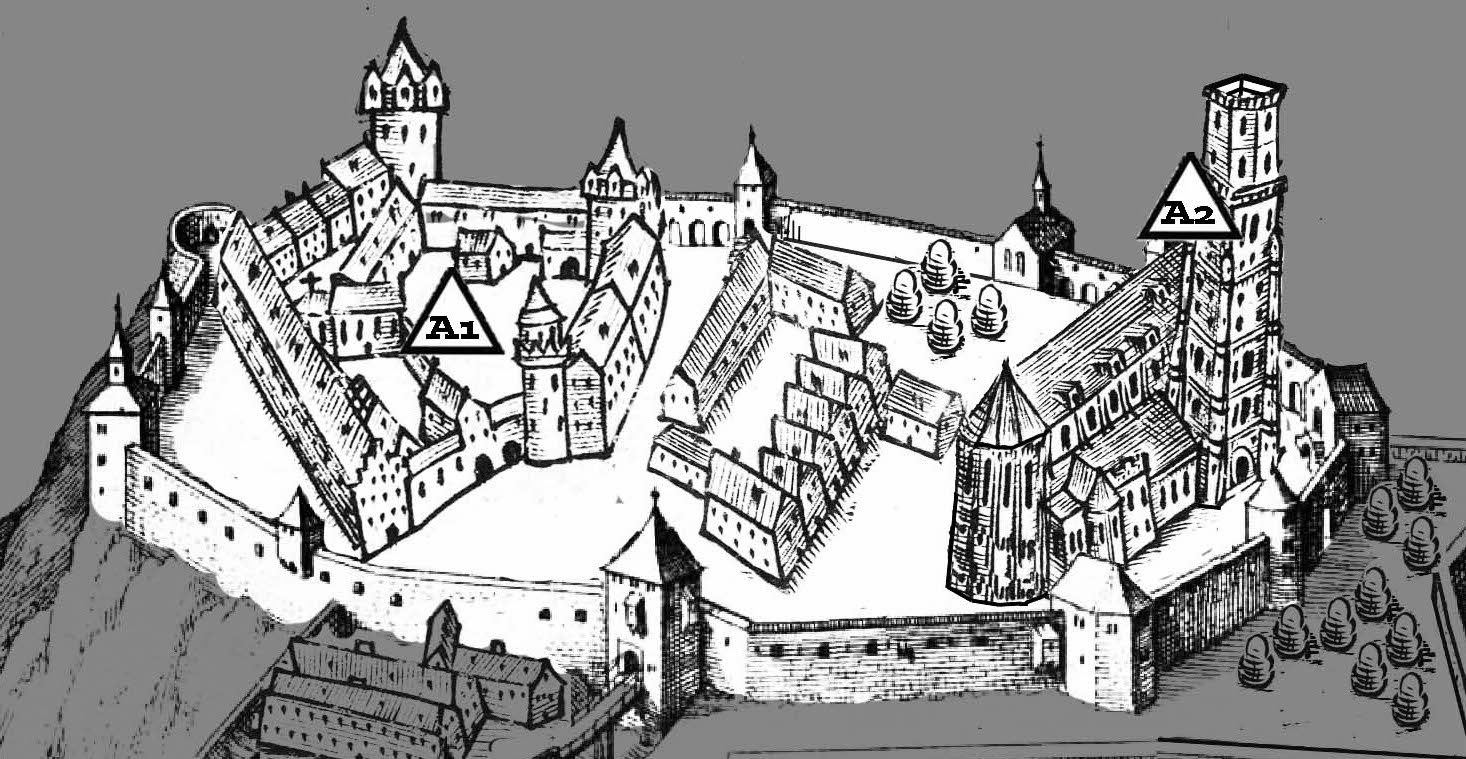
Thule Islands - [0203] Ealfa Castle

Ealfa Castle is the home of the Church of Lough Order of the Sisters of the White Shield. The castle is built up on a spur of limestone known as the white ridge, and is well positioned to defend the settled southern parts of Thule Island from the more rugged north. There are said to be five levels beneath the fortress itself but if this is true someone else will have to document them.

The temple and settlement around it is basically an armed camp. Templers patrol the coast road all the way to Alesford. They also make regular forays into the wilds looking for trouble. 

The templars have developed a working relationship with the Priestesses of Lustria at the nearby Gatefell baths, a relationship that has eased tensions between the Imperials and Keltoi on Eastern Thule. The Templars of the White Shield are known unofficially as the Defenders of Lustria.


White Peak

The top of the white ridge is known as the White Peak because of the two major buildings, the White Castle and the White Cathedral were built out of the brightest limestone that could be mined from the ridge. The White Peak is filled with worshipers on Saturday when the gates are opened to all who want to enter the White Temple, other days only the Sisters of the White Shield and employees are found.
[A1] The White Castle - The castle headquarters of the Order of the Sisters of the White Shield. The castle has a number of offices and a long dorm and houses 50-100 sisters at any time. There are also over a dozen support staff (cooks, cleaning staff, etc). The Sisters are well known for over-indulging in drink.
[A2] The White Temple - Temple of Lough built from the white limestone and can be seen from miles away. The top of the tower has a prayer room with no roof that is used for personal prayer to get closer to Lough. On Saturdays the Temple is filled with the Sisters of the White Shield who occasionally get so worked up they flagellate themselves.

White Castle and White Temple

The Ledge

Most visitors to the Ealfa settlement stay int eh Dorms or at Hakkon's house waiting for their chance to visit the White Temple on Saturday.
[B1] Pilgrim's Dorms - A set of Dormitories built to house Clergy of Lough visiting the White Temple. 
[B2] Hakkon's House - Hakkon was a rancher who has retired and converted his home to a semi-temple to handle Priestess of Lustria who have set up a temporary temple and bath house of Lustria. He also brews a reasonable ale and supplements the Dorm kitchen with vegetable dishes cooked up by the Priestesses of Lustria.
[B3] Lough's Overview - This open platform has an amazing view of the forests to the East.

The Area known as the ledge

Lower Ealfa

Lower Ealfa is filled with Keltoi craftsmen that do all the things a settlement of this size needs. The area is remarkably free of the criminal element that would normally prey upon pilgrims because the Sisters of the White Shield treat criminals very, very harshly.
[C1] Farmers Market - The market takes place in the white cobblestone street. The market is open every Saturday. 
[C2] Horse & Hound Inn - The inn has a stable in back and five rooms for visitors. It Haakan makes an amazing ale that he primarily sells to the Sisters of the White Shield. He makes enough to keep his common room filled with locals and travelers.
[C3] Public House, Godwins - A public house favored by pilgrims and locals.

Lower Ealfa


Wednesday, March 18, 2020

Thule Island - [0101] Dagru Castle

Dagru Castle

Dagru has a Keltoi population with a number of Imperial rogues and seamen. The town is run by a Keltoi noble who keeps the place from becoming too rebellious. The town has market three days a week and on special occasions and must be renewed by the March Lord every year.  Dagru is known for the pale white dolmans on the Hills to the East. The dolmans were once a major pilgrimage destination for those of the Old Faith but not so much anymore.


Dagru, The Keltoi Town

Dagru with Callouts

[1] Dagru Castle - A free-standing keep with connecting gateshouse (hidden by the keep). The keep dates back prior to the crusade and is embarrassingly old.
[2]  Temple of Pallas Regina - The largest temple of the Old Faith on Thule Island. The complex includes a dorm for the Priestesses.
[3] Temple of Lough - A relatively small one as far as those things go. This is considered a punishment post among the Lough Clergy on Thule Island. The staff is made up primarily of those that have offended their superiors in the Church in some way. They bend over backwards to avoid offending the Old Faith because they are so vastly outnumbered in Dagru.
[4]  Mill - The mill grinds grain in exchange for 10% of the grain. The miller works with one of the large merchant houses in Cambria to sell the excess grain. The mill is built within the old Temple of Pallas Regina that has been refurbished. The mill works using a donkey to turn the mill wheel. The system is antiquated but the miller says the mill was blessed by the previous High Priestess of the Old Faith when she sold the temple to him. This is a lie to justify his thrift but one nobody is willing to challenge the lie, instead it has filled the locals with great pride.
[5]  Dagru Inn - An inn that caters to sailors and travelers. The inn is built inside an old warehouse so that it is excessively spacious and often houses dances, weddings, and other events. The inn is the center of town society the way a Church would be in other areas. Dagru Inn tolerates Imperials and foreigners.
[6]  Wulfric Public House - A public house favored by locals who don't want to see or hear Imperials or foriengers.

Dagru Castle